The Uncertainties of AI in Stock-Market Timing: A Critical Examination
The stock market has long been a domain where fortunes are made and lost in the blink of an eye. As technology becomes increasingly advanced, many have turned to artificial intelligence for an edge in timing the market. But how well does AI really perform in this high-stakes game?
A new study suggests that relying on AI for stock-market timing may not be as reliable as some traders hope. This revelation poses significant questions for investors and tech enthusiasts alike, challenging the faith we have placed in machines. Let’s dive deep into this intriguing study and its implications for the world of finance.

The Promise of AI in Financial Markets
AI holds great promise in the financial sector, offering the ability to process vast amounts of data far quicker than any human could. Algorithms can analyze trends, news, and stock movements to make predictions about market shifts.
Many investors view AI as a game-changer, believing that these machines can provide the insights needed to succeed where human intuition falls short. This belief has driven substantial investments into AI-driven trading systems.
Potential Benefits of AI in Trading
- Data Processing: AI can swiftly process and analyze large volumes of financial data.
- Pattern Recognition: Algorithms can identify patterns and trends that might be invisible to human traders.
- Emotionless Trading: AI is not swayed by emotions, potentially leading to more rational decision-making.
Challenges: Where AI Falls Short
Despite its promise, AI is not infallible. The recent study highlights key areas where AI may struggle in effective stock-market timing. Firstly, AI models can be limited by the quality of the data they are trained on.
Moreover, these systems often rely on historical data to predict future trends—an approach that may not account for unpredictable market factors such as political turmoil or natural disasters.
Key Limitations of AI in Stock-Market Timing
- Data Quality: Bad input data can lead to inaccurate predictions.
- Overfitting: Models might become too specialized to past data, reducing their future applicability.
- Lack of Context: AI lacks the ability to understand complex socio-economic contexts that affect markets.
The Study’s Findings
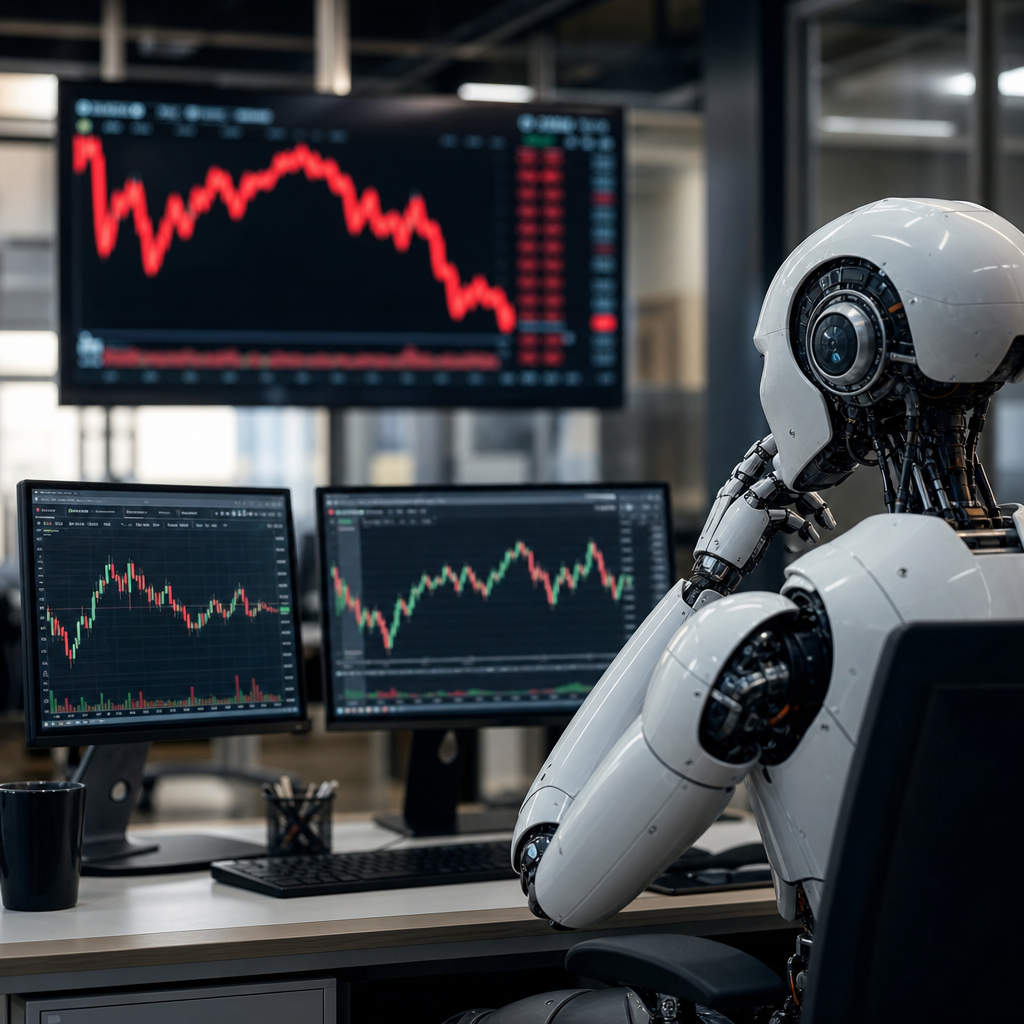
The study, which examined multiple AI-driven trading strategies, found that these systems often underperform during volatile market conditions. Algorithms struggled to adapt quickly to sudden changes, unlike human traders who can interpret nuanced information.
This revelation could lead to a reevaluation of how much trust we endow in AI solutions in finance, emphasizing the need for a balanced approach that combines both human intuition and AI efficiency.
Conclusion: A Balanced Approach
The study serves as a critical reminder of the limitations inherent in AI technology, especially in complex systems like financial markets. While AI offers significant advantages in data analysis and pattern recognition, it is not a standalone solution.
Investors might find greater success by using AI as a tool to complement, rather than replace, human judgement and expertise. As the dialogue around AI in trading continues, a nuanced understanding of both its capabilities and limitations is essential.
Table: A Comparison of AI and Human Traders
| Criteria | AI | Human Traders |
|---|---|---|
| Data Processing Speed | High | Moderate |
| Emotion in Decision-Making | None | Potentially high |
| Adaptability | Limited to programming | Highly adaptable |
| Pattern Recognition | Advanced | Basic to Intermediate |
| Contextual Understanding | Low | High |