A Reality Check on the AI Jobs Hysteria
Artificial intelligence has been heralded as both an economic savior and a job destroyer. Depending on who you ask, AI is either speeding us towards unprecedented prosperity or precipitating an employment crisis. Whatever your stance, the chatter is impossible to ignore; it’s time we examine these claims with a critical eye.
So, where do we stand in this debate? On one hand, AI technologies promise efficiencies and innovations across diverse sectors. On the other, skeptics warn of widespread job displacement. The truth likely lies somewhere in between, warranting a nuanced discussion on the interplay between AI and employment.

Are Robots Really Taking Over Jobs?
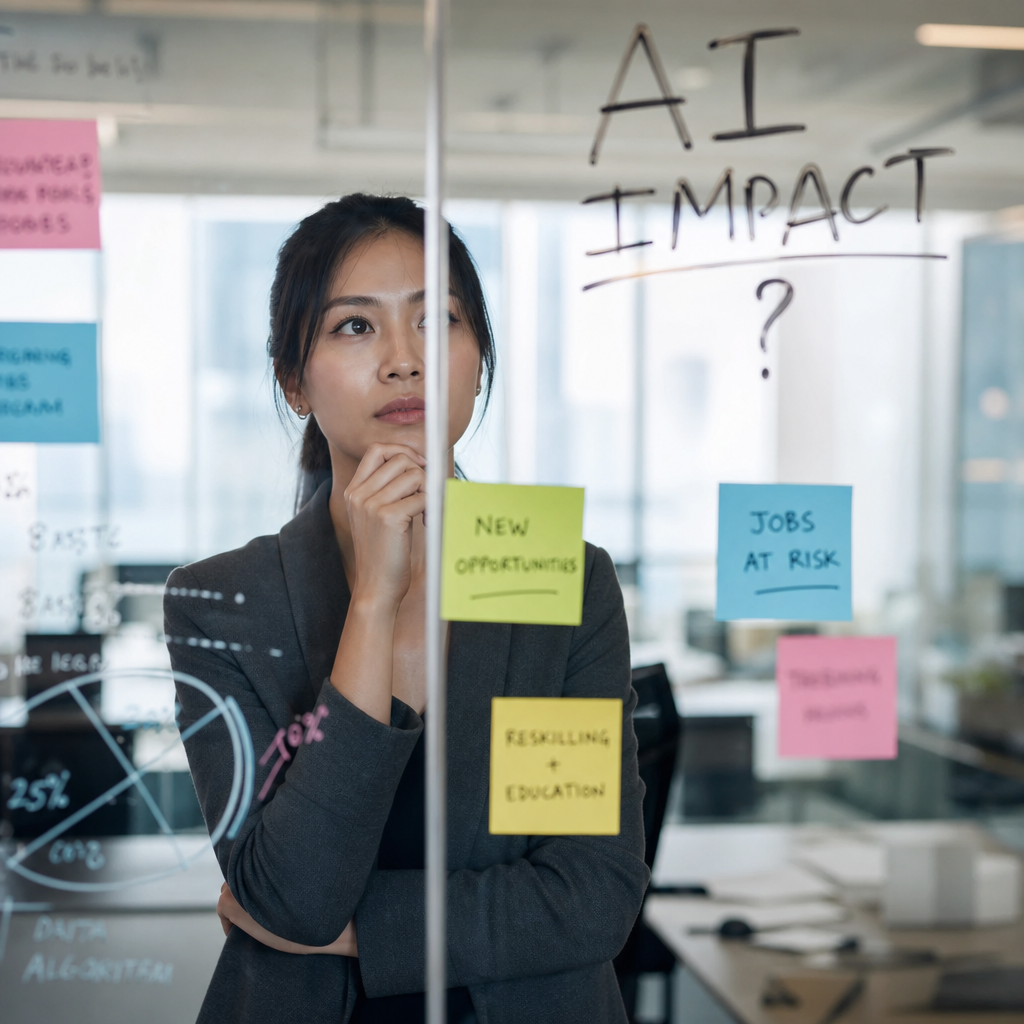
The fear of automation replacing human workers is nothing new. While AI advancements could automate certain routine jobs, they also create new opportunities. Historical patterns show that technology often shifts job demands rather than eradicating them outright.
Job Creators, Not Job Killers
AI can elevate productivity, leading to cheaper goods and services. Such efficiencies foster greater wealth generation, which, in turn, can create more consumer demand and, consequently, more jobs.
- AI job enablers: Data analysts, AI trainers
- New industries: Autonomous vehicles, personalized education
- Future foresight: Continuous skill adaptation will be crucial
The Human Touch
Despite AI’s capabilities, certain tasks still require human intuition or emotional intelligence. AI is a tool, not a standalone solution, necessitating human oversight in many fields.
Therefore, AI is more likely to augment human labor rather than replace it entirely. By collaborating with AI, employees can focus on tasks that demand complex problem-solving and creativity.
| AI Impact | Industry | Potential Outcome |
|---|---|---|
| Automation | Manufacturing | Increased efficiency, potential job displacement |
| Data Analysis | Health | Advanced diagnostics, new data-related roles |
| AI Development | Tech | Innovation, expansive job creation |
Embracing Change
For workers affected by AI, adaptability is crucial. Transitioning smoothly into emerging roles requires new training and education systems. Employers and policymakers must collaborate to support these shifts.
The narrative of AI as a job killer is overly simplistic. Rather than fearing job loss, the focus should be on fostering skills that align with an AI-driven economy.
Conclusion: A Balanced Outlook
While AI certainly disrupts specific sectors, the hysteria surrounding an AI-induced unemployment crisis is exaggerated. The future of work will likely involve collaboration between humans and machines.
Ultimately, addressing the challenges posed by AI requires thoughtful policy, corporate responsibility, and, most importantly, an adaptable workforce ready to learn and grow alongside evolving technologies.