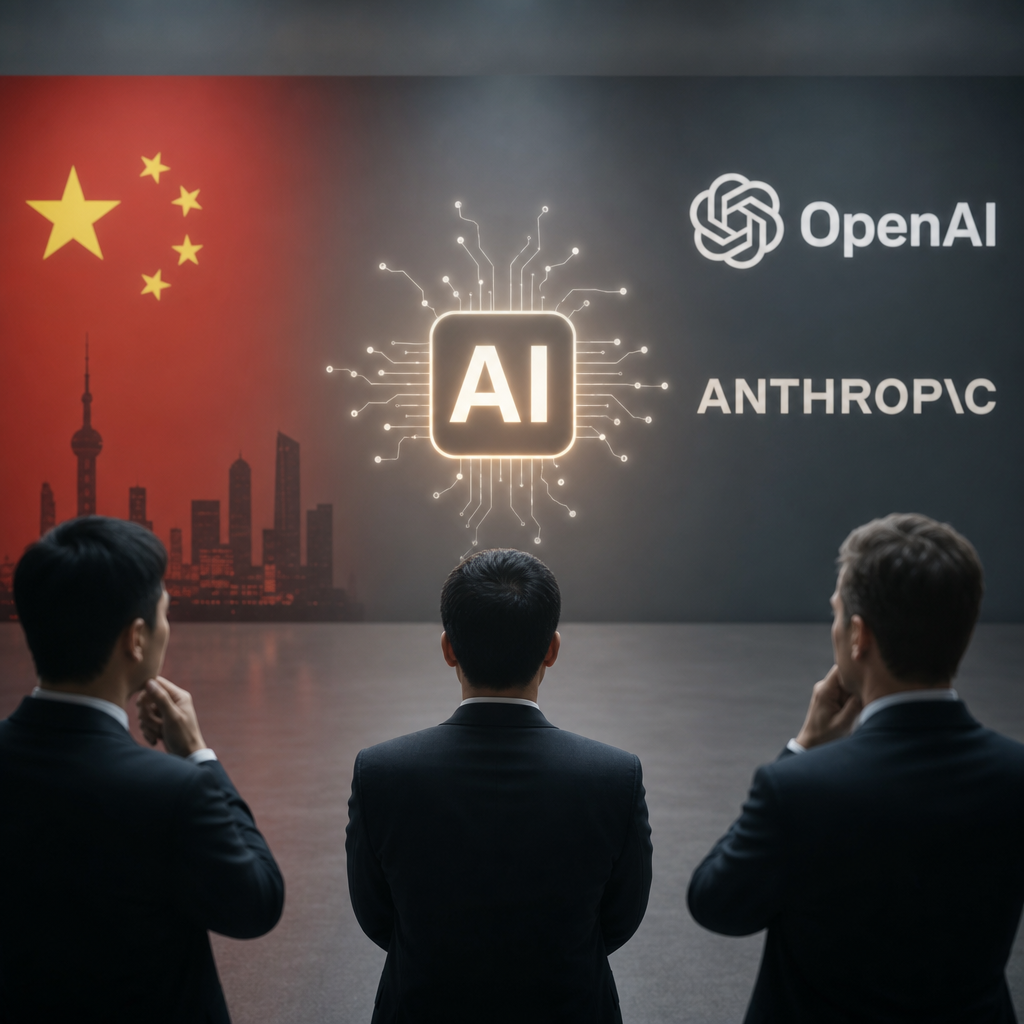
AI’s Global Expansion: A Boon for China, A Challenge for Western Innovators
In an era where artificial intelligence is reshaping industries worldwide, China stands to gain significant advantages from its broader adoption. However, this burgeoning landscape poses notable challenges for Western AI giants like OpenAI and Anthropic. The shifting dynamics in AI’s global reach highlight a captivating juxtaposition of innovation, competition, and geopolitics.
The democratization of AI technologies means that tools once exclusive to a select few are now accessible across the globe, including in emerging markets. China, with its rapid technological advancements and strategic government initiatives, is uniquely positioned to leverage this shift. Meanwhile, for companies like OpenAI and Anthropic, navigating these changes requires agility and foresight.

The Rise of AI in China
China’s aggressive AI strategy aligns with its long-term economic and geopolitical goals. The country’s government has made AI a national priority, investing heavily in research and development.
- Massive state funding
- Emphasis on AI education
- Strategic tech partnerships
These efforts have propelled China to the forefront of AI innovation, rivaling Silicon Valley in many respects.
Key Players in the Chinese AI Ecosystem
In China, AI is not just about technology but also about policy and infrastructure. Several key players are shaping the nation’s AI landscape.
- Alibaba and Tencent: Leaders in AI commercialization
- Baidu: Pioneering autonomous driving and internet of things
- Sensetime and Megvii: Innovators in facial recognition
These companies, supported by favorable government policies, are becoming formidable competitors on the global stage.
The Impact on OpenAI and Anthropic
For OpenAI and Anthropic, the expanding reach of AI presents both opportunities and obstacles. While global markets offer new revenue streams, they also introduce increased competition and regulatory challenges.
OpenAI, known for its advanced natural language processing models, must continuously innovate to maintain its competitive edge.
Anthropic, focusing on building AI that is aligned with human values, faces the task of ensuring ethical standards in regions with differing regulations.
The Role of Regulation in AI Deployment
Regulation plays a critical role in how AI can be deployed and utilized across different regions. China’s regulatory environment supports rapid AI deployment, enabling swift commercialization of new technologies.
| Region | Regulatory Focus |
|---|---|
| China | Innovation-friendly, government-driven |
| United States | Privacy-focused, slow-moving legislation |
| Europe | Highly regulated, stringent data protection |
This regulatory distinction highlights the varying levels of agility with which AI companies must operate.
Navigating the Future of AI
As AI continues to evolve, the landscape will be shaped by collaboration and competition. Multinational AI initiatives and partnerships can provide a path forward for companies looking to balance innovation with ethical considerations.
Whether through joint ventures, research collaborations, or policy advocacy, AI leaders must engage with global stakeholders to navigate this complex environment.