How AI is Transforming Agriculture: A New Era of Smart Farming
Agriculture, a cornerstone of human civilization, is experiencing a technological renaissance. Thanks to artificial intelligence (AI), farmers are now harnessing tools that were once confined to the realm of science fiction. This dramatic shift is reshaping the landscape of farming, creating smarter, more efficient, and sustainable agricultural practices.
Gone are the days when tractors and plows dominated the fields. Today, precision agriculture powered by AI is the talk of the town. Agricultural giants and small-scale farmers alike are increasingly investing in AI to tackle age-old challenges like crop management, pest control, and yield prediction. But what exactly is driving this rapid adoption and how is AI making a tangible difference on the ground?

The Rise of Smart Farming
AI technologies are empowering farmers to make informed decisions, leading to increased productivity and reduced resource wastage. Let’s dive into some specific applications that are revolutionizing the sector.
Precision Agriculture
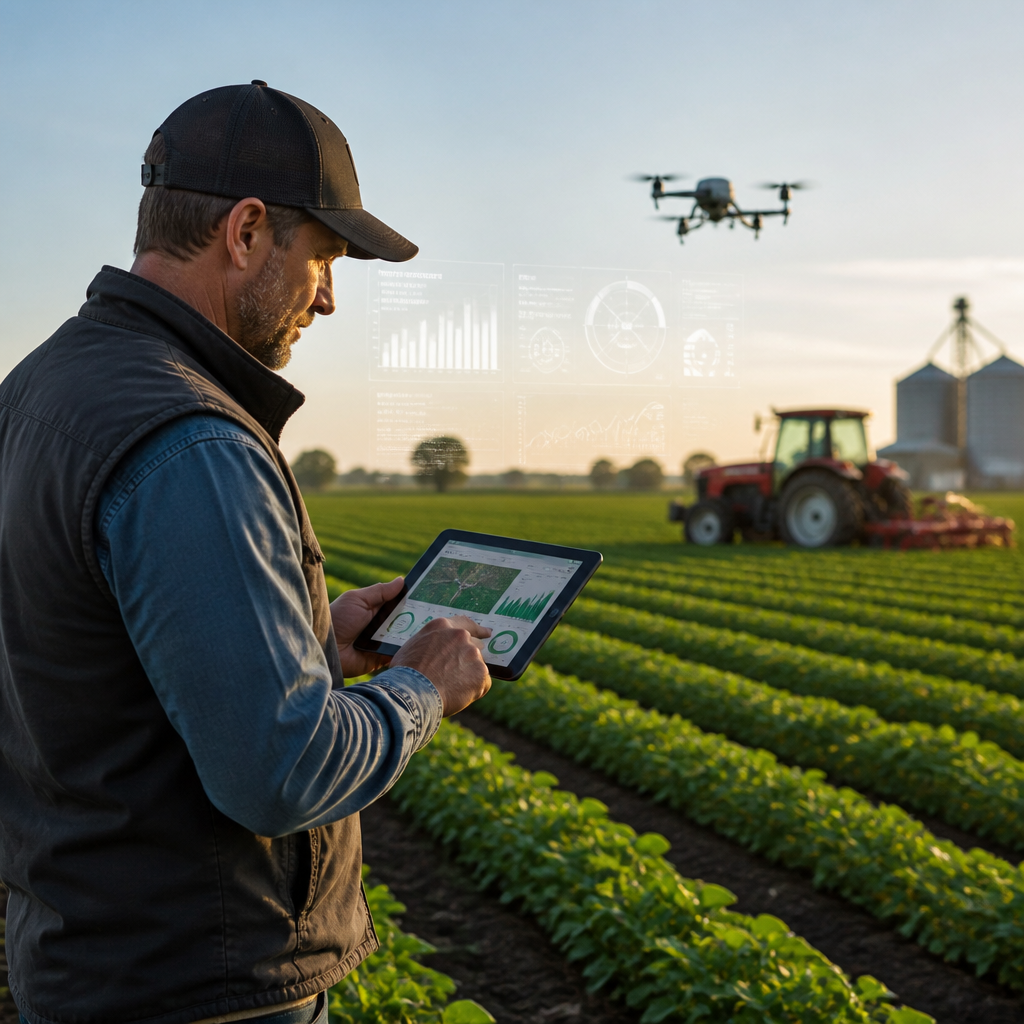
At the heart of smart farming is precision agriculture, which uses AI to monitor and analyze field data. Drones and satellites capture high-resolution images, while AI algorithms analyze these data to provide actionable insights. This enables farmers to precisely manage irrigation, seeding, and fertilization—saving time and boosting yields.
- Remote sensors track soil moisture levels, optimizing water usage and preventing over-irrigation.
- AI-driven models predict the best planting and harvesting times based on weather patterns, maximizing crop output.
Pest and Disease Management
Pests and diseases account for significant crop losses every year. AI helps nip these issues in the bud by enabling proactive management strategies. Through image recognition, AI can identify early signs of disease and pest infestations, allowing farmers to act swiftly.
- Machine learning models forecast pest outbreaks, enabling timely interventions.
- AI-powered applications provide real-time alerts and recommendations for crop protection.
AI in Farm Equipment
AI is also transforming farm machinery, turning tractors and harvesters into sophisticated tools equipped with cutting-edge technology.
Autonomous Machinery
Self-operating tractors and harvesting robots are no longer a fantasy. These machines, guided by AI algorithms, perform tasks with high precision and minimal human intervention.
- Autonomous tractors plow fields efficiently, reducing the need for manual labor.
- Robotic harvesters pick crops at optimal ripeness, minimizing waste and maximizing quality.
The Future of AI in Agriculture
The benefits of AI in agriculture are numerous, but future innovations promise even greater possibilities. As technology advances, the potential applications of AI will continue to expand, offering farmers new tools to combat climatic changes and food scarcity challenges.
AI and Climate Resilience
With unpredictable weather patterns threatening global food supplies, AI offers hope. By integrating AI’s predictive analytics with climate data, farmers can better prepare for weather extremes, ensuring sustainable agricultural practices.
- AI models simulate various climate scenarios, helping farmers develop robust crop management plans.
- Data-driven strategies aid in adapting to changing environmental conditions, safeguarding food security.
Agricultural IoT
The Internet of Things (IoT), in conjunction with AI, holds tremendous potential for agriculture. Smart sensors and connected devices provide real-time monitoring and control over farming operations.
- IoT networks collect vast amounts of data, improving farm management decisions.
- AI processes this data into usable insights, optimizing everything from livestock care to crop health.
Adoption Challenges and the Road Ahead
While AI brings promising changes, its integration is not without challenges. Farmers face barriers such as high initial costs, technology adoption curves, and data privacy concerns.
Overcoming Barriers
Solutions are emerging to address these hurdles, ensuring wider AI adoption in the agricultural sector.
- Government initiatives and subsidies make AI technology more accessible to farmers.
- Training programs equip farmers with necessary skills to leverage AI effectively.
In conclusion, AI is undeniably altering the agriculture industry. With technological advancements, AI will continue to be a pillar of modern farming methods, offering new solutions for age-old problems. As we traverse this exciting path, embracing innovation is key to shaping a sustainable and productive future for agriculture.