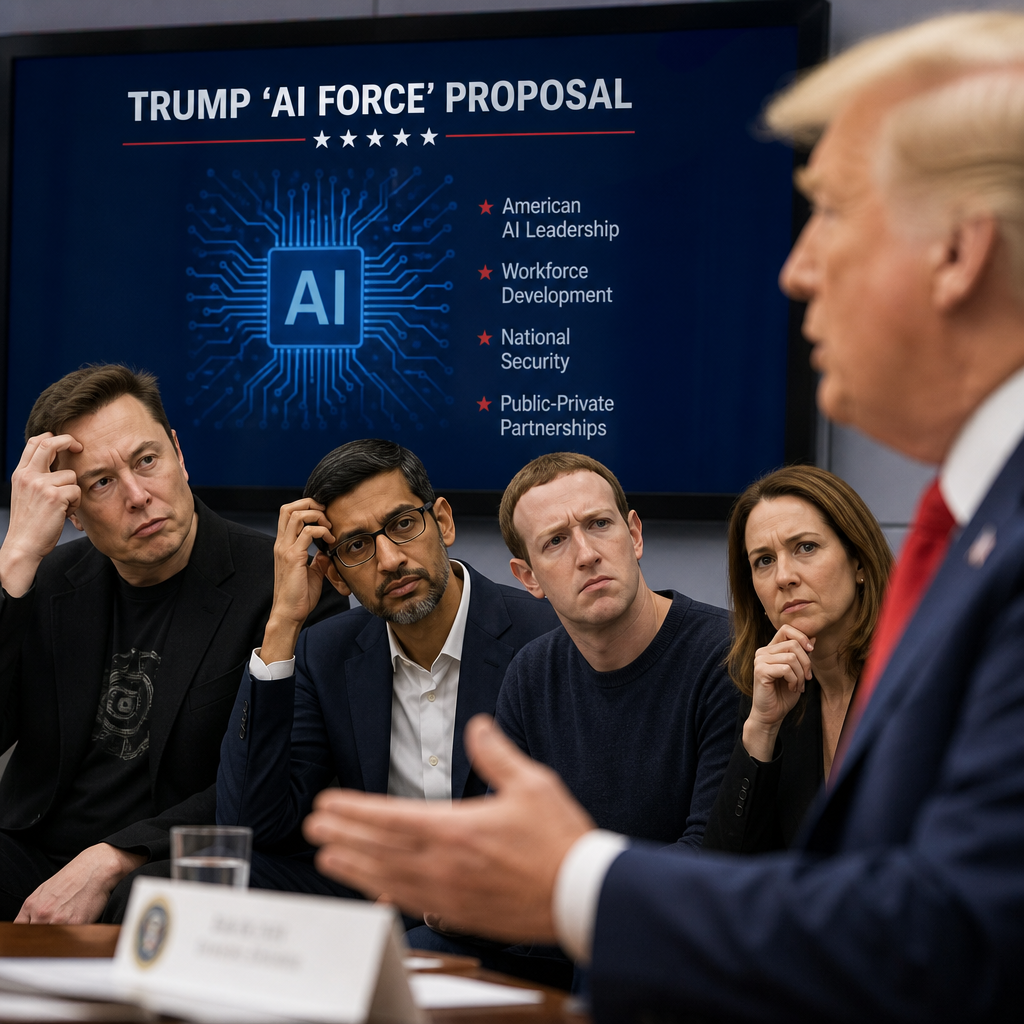
Understanding Trump’s ‘AI Force’ Proposal: What It Means for Tech
The tech industry is no stranger to high-profile proposals and initiatives, but the latest suggestion from former President Donald Trump is causing a stir. His idea to establish an ‘AI Force,’ a task force focused on artificial intelligence, has left tech leaders and analysts scratching their heads.
While the specifics are still vague, the proposal signals a potential shift in how AI could be integrated into national policy and governance. As tech companies and experts assess the implications, questions about feasibility, leadership, and strategic objectives are at the forefront of the discussion.

The Concept of an ‘AI Force’
So, what exactly is an ‘AI Force’? While details remain sparse, the idea revolves around creating a centralized body that governs and oversees developments in AI. This body would presumably focus on the ethical, safety, and strategic aspects of AI applications.
The proposal seems to borrow from military or enforcement terminologies, suggesting a structured, authoritative approach to AI governance. This raises concerns among companies and researchers who fear overly rigid controls could stifle innovation.
Challenges Facing the Proposal
- Unclear Objectives: With few details revealed, the precise goals and responsibilities of an ‘AI Force’ remain ambiguous.
- Leadership Concerns: Identifying qualified, unbiased leadership for such an entity could prove challenging.
- Balancing Innovation and Regulation: The tech industry thrives on innovation, raising fears that strict oversight could hinder progress.
Potential Benefits
Despite its challenges, the concept of an ‘AI Force’ could lead to several positive outcomes. If implemented effectively, it could enhance AI governance, promote ethical practices, and provide a unified voice in international AI standards.
Centralized oversight may also improve AI safety protocols, reduce bias in algorithms, and address potential job displacement impacts brought about by automation and machine learning tools.
Comparing International AI Policies
When we look at global counterparts, many nations are grappling with their own AI strategies. For example, the European Union’s AI Act seeks to regulate AI by categorizing systems based on risk levels and imposing specific requirements. Meanwhile, China has rapidly advanced public sector AI applications.
| Country/Region | Main AI Policy Approach |
|---|---|
| European Union | Risk-based regulations, ethical focus |
| China | Government-led initiatives, rapid implementation |
| United States | Mixed federal and state-level initiatives, focus on private sector |
What Comes Next?
As the tech industry continues to ponder Trump’s proposal, the discussion will likely evolve as more information becomes available. Industry leaders emphasize the importance of collaboration between government and private sector forums to ensure any new body benefits from shared expertise.
Regardless of the outcome, the proposal has sparked an important debate about the future of AI governance—a topic that will undoubtedly shape the industry’s direction in years to come.