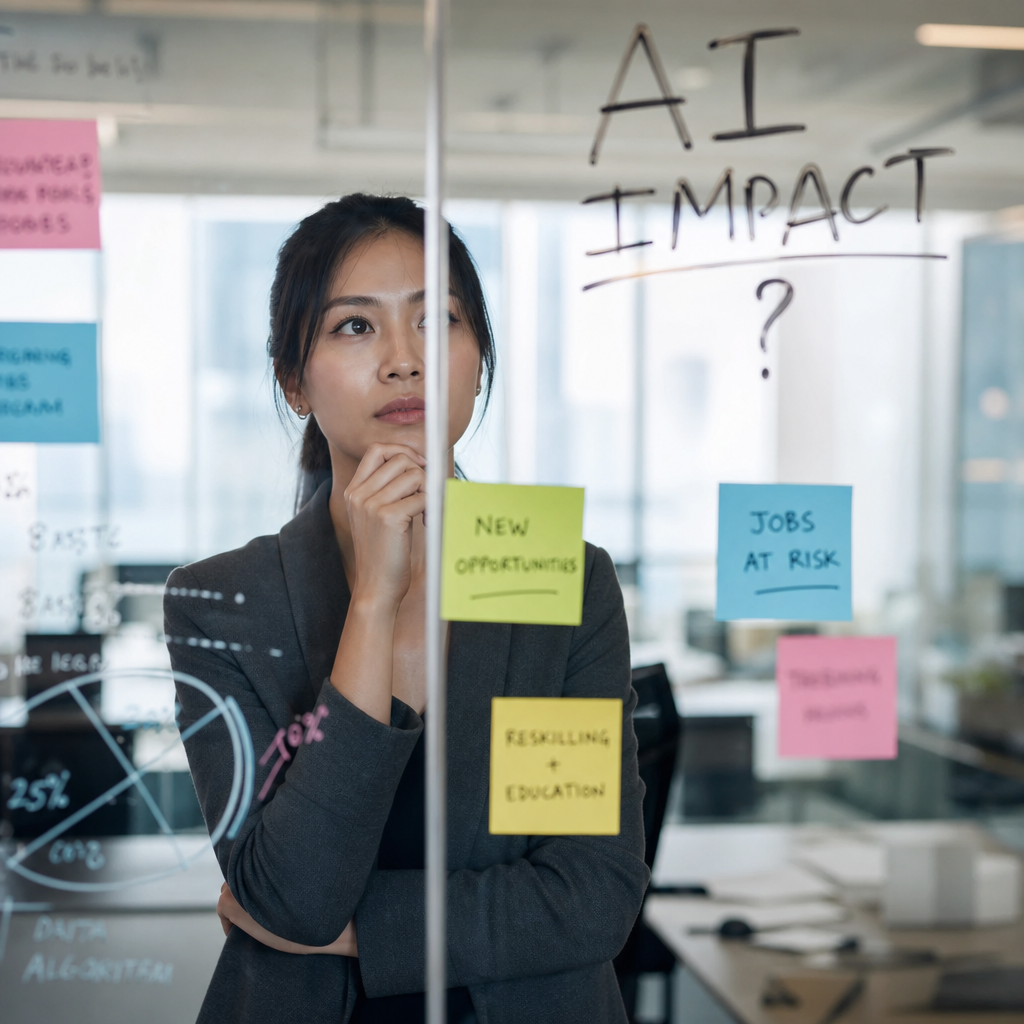
How Recruiters Focus On Soft Skills In The Age Of AI-Powered Hiring
In today’s rapidly evolving job market, the demand for technological expertise is a given. But, as Artificial Intelligence (AI) continues to permeate every facet of recruitment, an intriguing shift is happening. Recruiters are increasingly valuing the hard-to-quantify attributes known as soft skills.
This transformation is not merely a trend but rather a necessary strategy. As AI-driven recruitment tools automate the vetting of technical qualifications, soft skills like creativity, emotional intelligence, and adaptability are becoming the distinguishing factors that set applicants apart from their peers.

The Rise of Soft Skills in the AI Era
The emphasis on soft skills isn’t new but has gained unprecedented significance. In the past, technical skills were seen as the gateway to securing a job, especially in tech-heavy industries. Yet today, an applicant’s ability to collaborate, communicate effectively, and adapt to changing conditions can be just as crucial as their ability to code or manage databases.
Why Soft Skills Matter
- Adaptability: The tech landscape changes rapidly, and employees who can adapt are invaluable.
- Communication: Complex ideas must be shared clearly across diverse teams.
- Teamwork: Projects require cross-functional collaboration to succeed.
- Creative Problem Solving: Innovating new solutions is crucial as AI takes over repetitive tasks.
The Role of AI in Shaping Recruitment
AI tools have revolutionized how recruiters operate. These systems are designed to assess resumes, analyze social media activity, and even evaluate video interviews, all in search of technical competencies.
But AI lacks the nuance to fully appreciate interpersonal skills. Algorithms can pinpoint keywords and highlight experience but struggle to evaluate an applicant’s emotional intelligence or creative flair—skills often demonstrated subtly in interviews or workplace interactions.
Tech Hiring Challenges with AI
- Over-reliance on Algorithms: Can lead to overlooking promising candidates who don’t fit the standard mold.
- Bias in Automation: AI systems can perpetuate existing biases engrained in the data they are trained on.
- Lack of Contextual Understanding: Soft skills are nuanced and require human interpretation.
Integrating Soft Skills into Recruitment Strategies
Recruiters are finding new ways to integrate soft skills evaluation into their hiring practices. This often requires re-thinking and expanding traditional assessment models.
By incorporating structured assessment techniques that target interpersonal strengths, companies ensure a more holistic evaluation of candidates—which is crucial in a highly competitive landscape.
Strategies for Assessing Soft Skills
| Technique | Description | Benefits |
|---|---|---|
| Behavioral Interviews | Assess past behavior to predict future behavior. | Reveals interpersonal and problem-solving skills. |
| Group Exercises | Simulates workplace collaboration. | Shows teamwork and communication abilities. |
| 360-Degree Feedback | Involves feedback from multiple stakeholders. | Offers a comprehensive view of the candidate. |
Concluding Thoughts
As AI continues to transform the recruitment field, the balance between technical prowess and soft skills becomes increasingly delicate. Mastering this balance is not only a necessity but an opportunity to build a robust, dynamic workforce.
For candidates, cultivating these skills could mean standing out in a sea of applicants. For recruiters, placing a premium on these attributes could spell long-term success.