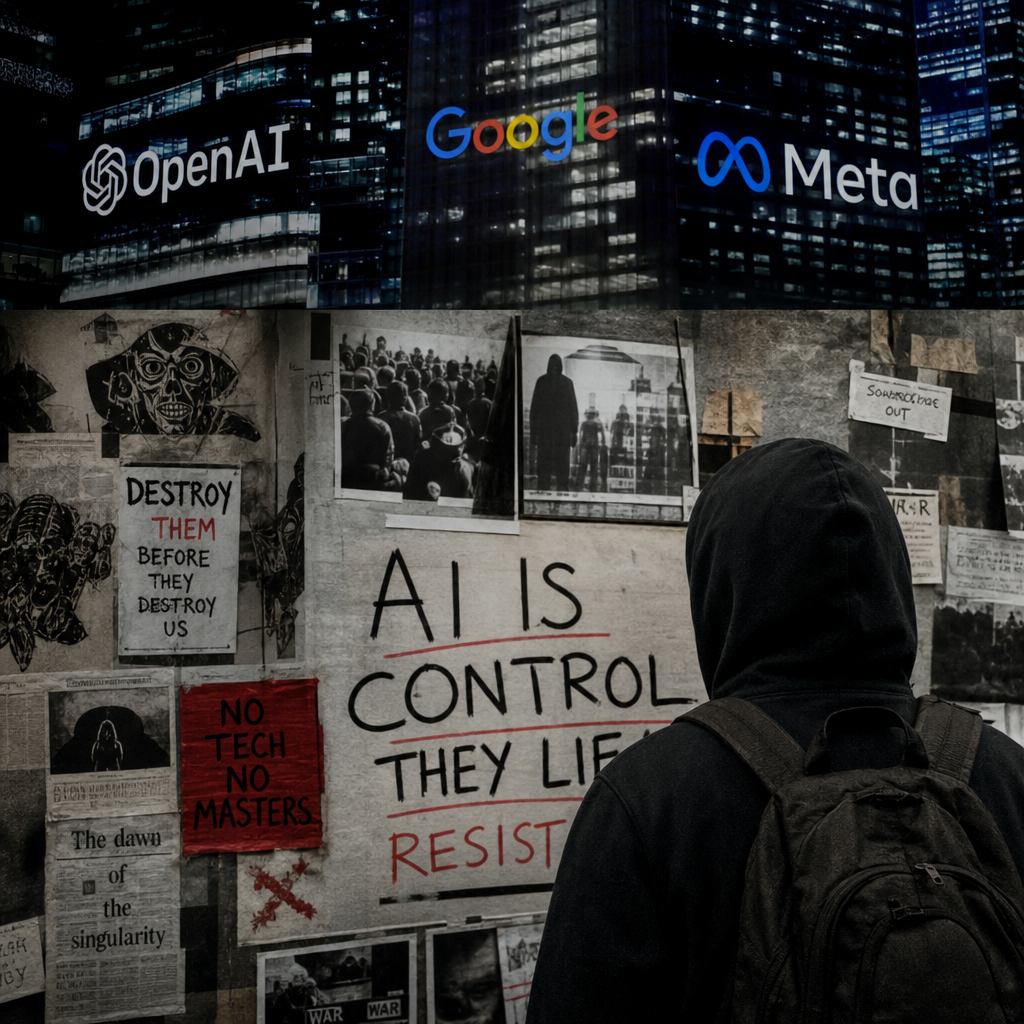
A Driver of Political Violence: The Breakneck AI Boom and Anti-Tech Extremism
Artificial Intelligence (AI) is transforming industries worldwide at an unprecedented pace. However, amidst these extraordinary advancements, there emerges an unforeseen consequence: the rise of anti-tech extremism. This phenomenon poses a new kind of threat, manifesting as political violence, driven by widespread fears over what AI could mean for society.
The rapid integration of AI into daily life has sparked a complex web of emotions and reactions. While many celebrate its potential to solve global challenges, others harbor deep suspicions and fear. These emotions aren’t entirely unwarranted, considering AI’s role in displacing jobs, altering privacy norms, and influencing socio-political dynamics. But what happens when these fears translate into organized resistance?

The Rise of Anti-Tech Extremism
Anti-tech extremism is characterized by actions meant to halt or reverse the progress of technology, particularly AI. The motivation can be ideological, economic, or even personal, with individuals or groups feeling threatened by the scope and speed of AI integration.
Factors Fueling Extremism
- Job Displacement: AI is automating roles across sectors, leaving many workers uncertain about their futures.
- Privacy Concerns: The use of AI for surveillance and data collection raises significant privacy issues.
- Socio-political Manipulation: AI’s ability to sway public opinion through social media algorithms is a cause for widespread concern.
Case Studies of Political Violence
To better understand the implications of anti-tech extremism, consider recent incidents where technological progress triggered violent actions. Cities worldwide have witnessed protests, sometimes violent, against tech companies and infrastructure perceived as threats to local economies and ways of life.
Impact on Socio-political Dynamics
Influence on Governance
Governments are now tasked with balancing technological innovation and the socio-economic impacts these advancements bring. This balance is crucial in preventing the growing disillusionment among citizens.
Transnational Effects
The impact of AI isn’t confined to national borders. As technology companies operate globally, anti-tech sentiments can spread across countries, affecting international relations and policies.
Strategies to Mitigate Violence
Public Policy and Regulation
Stricter regulations and policies are essential to ensure AI develops in a direction beneficial to all, mitigating fears associated with its rapid adoption.
Community Engagement and Education
- Education: Increasing public understanding of AI reduces fear and misinformation.
- Dialogue: Open discussions between tech firms, governments, and communities foster trust and collaborative solutions.
Future Outlook
The road ahead promises even more AI advancements, making it crucial to address existing concerns comprehensively. By doing so, society can harness AI’s benefits while minimizing risks associated with its growth.
In conclusion, while the anti-tech extremism is a real and pressing concern, it also presents an opportunity. An opportunity to rethink and reshape the role of technology in our world, ensuring it serves humanity collectively rather than creating further division.